Around Akihabara Station — Electric Town, Showa-dori and Suehirocho. Honest prices, no surprises.
Akihabara is famous worldwide for electronics and anime — but when the shopping is done, the streets around the Electric Town and Showa-dori exits fill with small taverns. This guide introduces 14 izakaya (Japanese taverns) in the area, starting — openly — with the taverns run by the company behind this guide: BEEF KITCHEN STAND’s two places, and their sister restaurant Katsuji, a shabu-shabu tavern a few minutes away in Sotokanda. Then eleven local places whose names, addresses and hours we verified one by one.
No rankings, no scores, no sponsored placements. Only facts we could confirm. Every price in this guide includes tax, and where a cover charge applies, we say so before you walk in.
Tap a name to jump to its introduction. First, our own taverns and their sister restaurant — we run this guide, and we say so. Then eleven local places we recommend as neighbours.
Home of the ¥290 bifteki — Akihabara’s best-value steak taverns
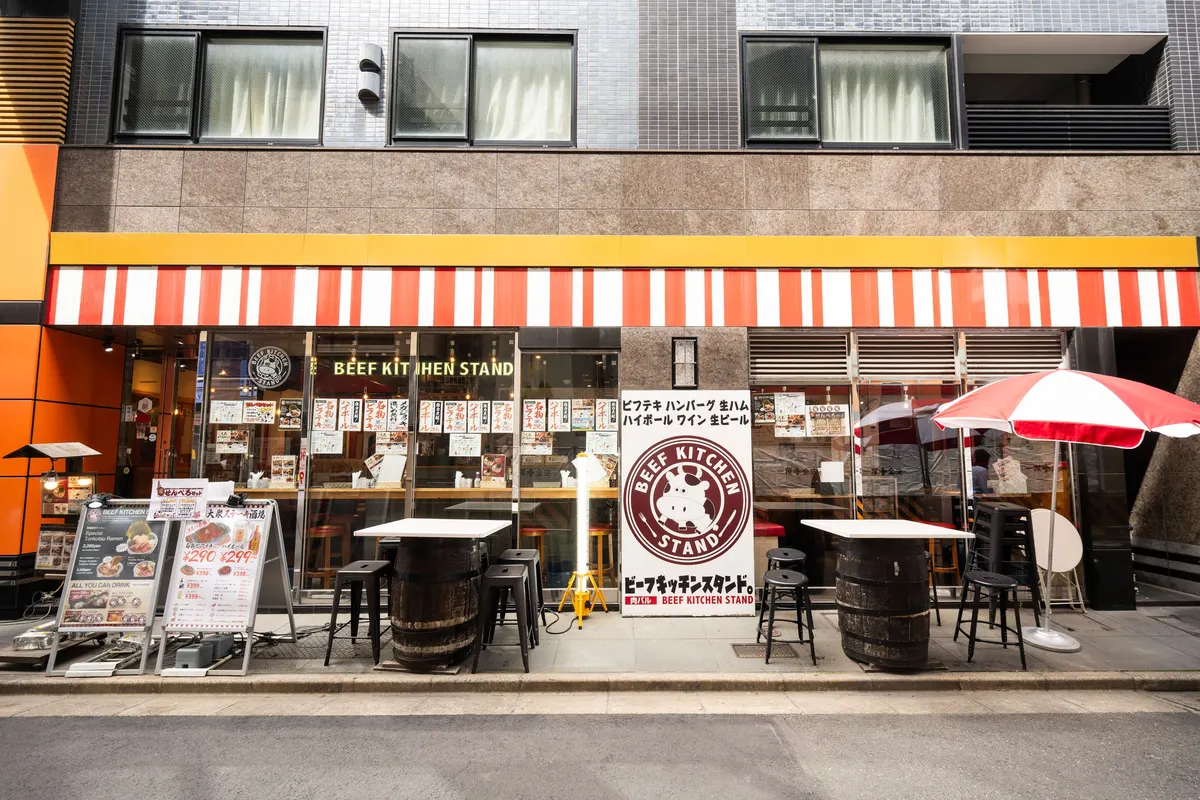
BEEF KITCHEN STAND is a casual steak tavern built on small plates: order lots of little dishes — from ¥109, tax included — share them around, and finish with the signature bifteki steak, the famous ¥290 bifteki (¥319 tax included). The ¥438 cover charge comes with unlimited edamame. Solo drinkers are welcome; so are groups. Two locations: one by the Electric Town exit, one on the Showa-dori side. A few minutes away in Sotokanda, our sister restaurant Katsuji serves shabu-shabu and the original ankake sukiyaki.
Steak tavern · Izakaya
BEEF KITCHEN STAND Akihabara Electric Town
A casual steak tavern for small plates and sizzling beef, right outside the Electric Town exit — the easiest first stop of an Akihabara night.
3-15-7 Sotokanda, Chiyoda-ku, Tokyo
Small plates from ¥109 / Signature bifteki steak ¥319 (tax incl.)
Cover charge ¥438 — includes all-you-can-eat edamame
Hours: Weekdays 4:00 PM–12:00 AM / Weekends & holidays 12:00 PM–12:00 AM
40 seats
Right by JR Akihabara Station, Electric Town Exit / Suehirocho Station (Ginza Line)
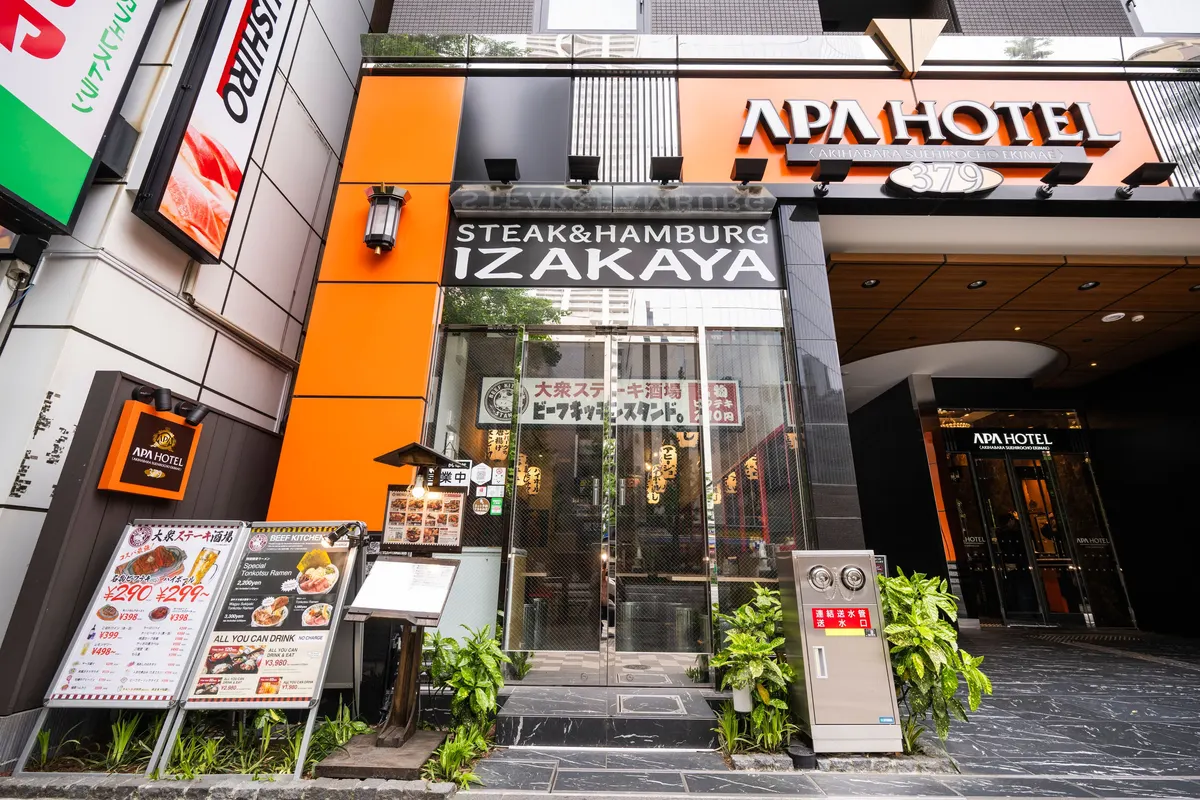
The same small-plates-and-steak formula on the ground floor of the APA Hotel on the Showa-dori side, with terrace seats — handy if you are staying in the area.
2-13-20 Kanda-Sakumacho, Chiyoda-ku, Tokyo (APA Hotel, 1F)
Small plates from ¥109 / Signature bifteki steak ¥319 (tax incl.)
Cover charge ¥438 — includes all-you-can-eat edamame
Hours: Weekdays 4:00 PM–12:00 AM / Weekends & holidays 11:30 AM–12:00 AM
44 seats (including 8 terrace seats)
2 min walk from Akihabara Station, Showa-dori Gate
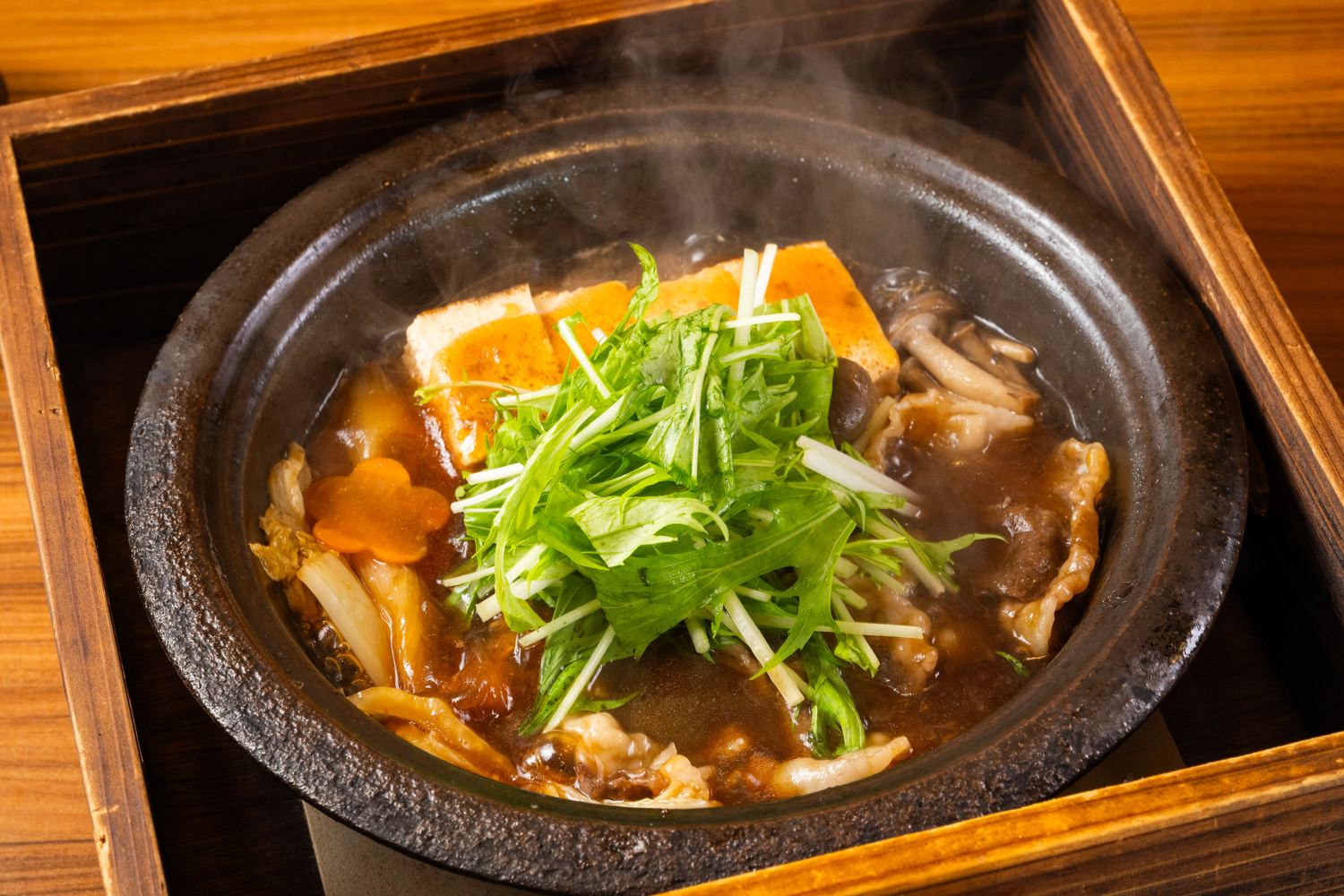
A shabu-shabu tavern where you can drink as well as dine. Its signature is the original ankake sukiyaki, a dish created by the owner himself, and the kitchen takes pride in passing on Japanese food traditions.
6-16-8 Sotokanda, Chiyoda-ku, Tokyo (Okachimachi Urban Hotel, 1F)
Signature: Original ankake sukiyaki
Lunch: Kuroge Wagyu sukiyaki set ¥1,500 (tax incl.)
* These three restaurants are run by Yakko Dining Co., Ltd., the operator of this guide.
Only at 6 locations in Japan
Wagyu Sukiyaki Tonkotsu Ramen — the bowl visitors come to Akihabara for
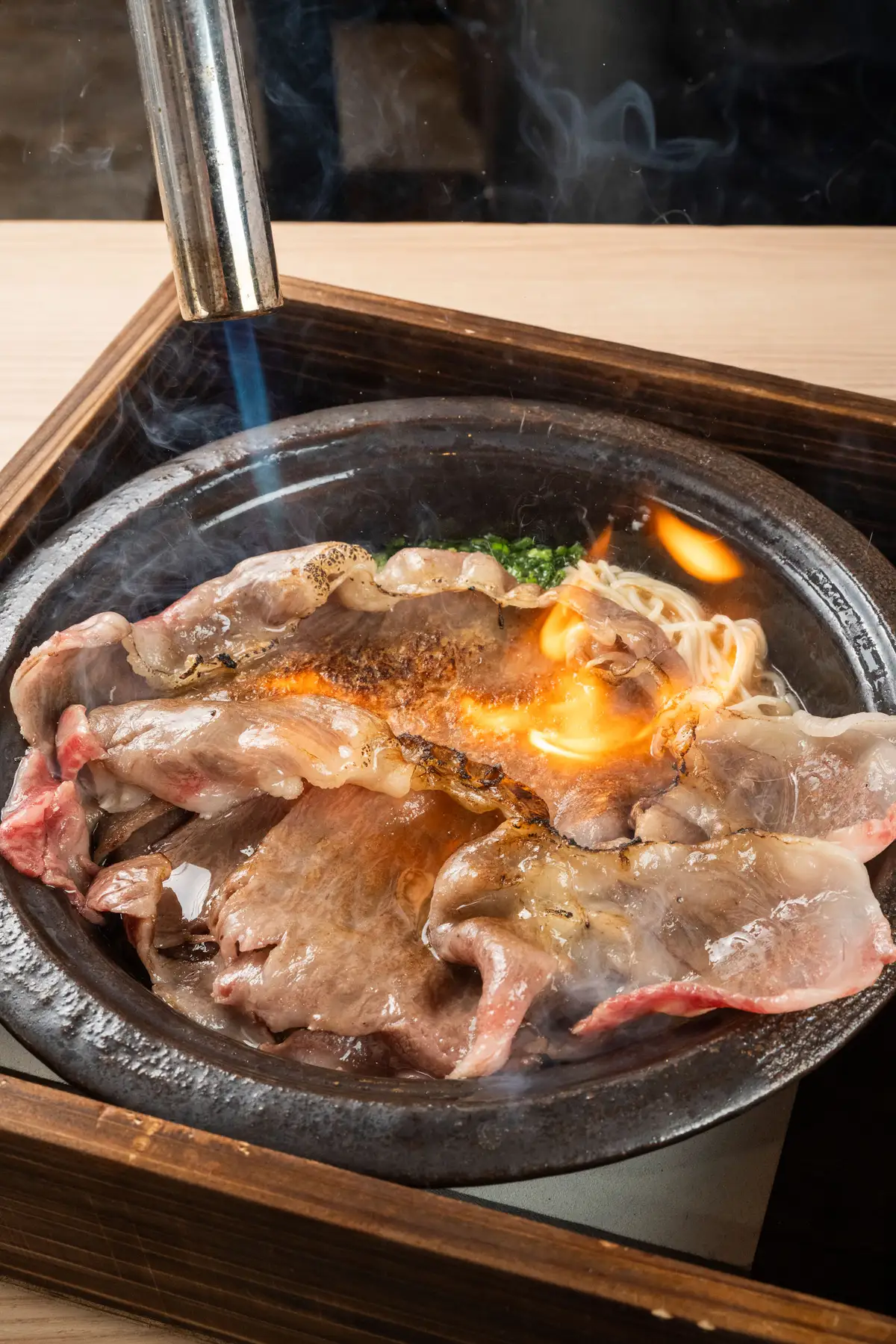
Wagyu, sukiyaki and ramen — the three dishes visitors to Japan most want to try — in a single clay pot. 150g of Kuroge Wagyu sirloin covers the noodles and is seared with a torch right in front of you. The broth is a rich, creamy tonkotsu (pork bone), seasoned a little gentler so the beef stays the star. BEEF KITCHEN STAND created this bowl for international guests; it is not on the regular menu — and both of our Akihabara taverns serve it.
¥3,630 (tax incl.) — at BEEF KITCHEN STAND Akihabara Electric Town and APA Hotel Akihabara. The other four locations are three in Shinjuku and one in Ueno. The same locations also serve a Special Tonkotsu Ramen (¥2,420) and a Tonkotsu Ramen (¥1,738), tax included.
Photo: the actual dish — Kuroge Wagyu sirloin being seared in its clay pot.
Local favourites
Eleven local taverns we are happy to send you to
Listed by style, not by rank. From a 24-hour seafood tavern to a one-minute-from-the-station standing bar — this is the range of an Akihabara night. Evening budgets are the typical per-person ranges published on Tabelog, Japan’s largest restaurant guide.
Yakiton · Motsuyaki · Yakitori
Yakiton Genki Honten
3 min walk from Akihabara Station, Showa-dori Exit (Todoroki Bldg, 1F)
Yakiton and motsuyaki skewers at a long-running local favourite on the Showa-dori side of the station.
Hours, closing days and budgets above were verified against official sites and major Japanese restaurant guides (Tabelog, Hot Pepper). Where sources disagreed, we left that item out rather than guess. Please double-check on the day — small taverns occasionally change hours. We use no photos of the local shops; the only photos on this page are of our own taverns.
Out and about
Akihabara beyond the shops — the sightseeing map
Akihabara is more than the Electric Town: an Edo guardian shrine, a red-brick station that outlived its trains, craftspeople under the railway arches and a small shrine by the river — faces from different centuries, all within a walk. Use this page to plan the hours before (and after) the taverns.
Shrine
Kanda Myoujin (Kanda Shrine)
7 min walk from JR Akihabara Station (2-16-2 Sotokanda, Chiyoda-ku)
Formally Kanda Shrine, founded — by tradition — in 730 and long the guardian shrine of Edo, serving 108 neighbourhoods across Kanda, Nihonbashi and Akihabara. Climb the stone steps from the Electric Town noise and the grounds open up, quiet above the street.
JR Akihabara Station, Electric Town Exit (Sotokanda, Chiyoda-ku)
The streets west of the station, dense with electronics stores and hobby shops — big retailers alongside anime and game specialists. Browsing your way through them is the point. The Electric Town association's site lists member shops and town information.
Right outside JR Akihabara Station, Electric Town Exit (1-15-16 Sotokanda, Chiyoda-ku)
The landmark building facing the Electric Town Exit. It began as a home for electronics-parts specialists; rebuilt, it now houses mostly hobby shops — figures, trading cards and model kits. One building that tells the story of how Akihabara changed.
6 min walk from JR Akihabara Station / 4 min from JR Okachimachi Station (5-9 Ueno, Taito-ku)
A 'town of making' under the JR tracks between Akihabara and Okachimachi. Workshops double as shops — leather goods, woodwork and ceramics made by hand. A different face of Akihabara from the Electric Town side.
Former Manseibashi Station (mAAch ecute Kanda Manseibashi)
4 min walk from JR Akihabara Station, Electric Town Exit (1-25-4 Kanda-Sudacho, Chiyoda-ku)
Shops set into the remains of Manseibashi Station, once a stop on the Chuo Line. Inside the red-brick viaduct completed in 1912, the old platform remains — and trains pass right beside it.
2 min walk from JR Ochanomizu Station (1-4-25 Yushima, Bunkyo-ku)
A Confucian temple built on this site in 1690. In the Edo period it housed the Shoheizaka Academy, the shogunate's school, and the site is remembered as a birthplace of modern education in Japan; it is a designated national historic site. A wooded, quiet precinct a short walk from Kanda Myoujin, across the Hijiri-bashi bridge.
5 min walk from JR Akihabara Station (2-25-1 Kanda-Sudacho, Chiyoda-ku)
A small shrine along the Kanda River. Its beginnings are traced to the willows Ota Dokan planted to guard Edo Castle from the unlucky northeast; the grounds also hold the Fukuju shrine, fondly known as 'Otanuki-san'. A quiet corner, minutes from the Electric Town crowds.
When the shops have tired you out, take the loop along the Kanda River. From evening, the taverns in this guide take over — the two BEEF KITCHEN STAND locations by the Electric Town Exit, and Katsuji Ueno Okachimachi near Suehirocho Station, are this neighbourhood's home bases for dinner.
Opening hours, closing days and admission fees change; please check each facility's official website before you go.
FAQ
Before you go
Is there a cover charge?
Many izakaya charge a small per-person cover called otoshi, which normally arrives as a small appetizer. At BEEF KITCHEN STAND it is ¥438 including tax, and instead of a token appetizer you get all-you-can-eat edamame. We print it here — and on the menu — so the bill never surprises you.
Do I need to tip?
No. Japan has no tipping culture, and prices are displayed with tax included. What you see is what you pay.
Can I come alone?
Absolutely. Drinking solo at a counter is a Tokyo tradition, and small-plates taverns like BEEF KITCHEN STAND are built for it — order a little of everything without committing to a big dish.
How late can I drink in Akihabara?
Later than you might expect from a shopping district. In this guide, Isomaru Suisan is open 24 hours, Toriichizu until 4:00 AM and Chibachan until 1:00 AM; most other places pour until around midnight.
What is the Wagyu Sukiyaki Tonkotsu Ramen?
A clay-pot ramen created by BEEF KITCHEN STAND for international guests: 150g of Kuroge Wagyu sirloin seared with a torch over noodles in a rich, creamy tonkotsu (pork bone) broth, ¥3,630 including tax. It is not on the regular menu and is served at only six locations in Japan — in Akihabara, at the Electric Town and APA Hotel locations. See the feature above.